When the Body Says No: Why Gabor Mate's Book Is Really About the Boundaries You Never Set
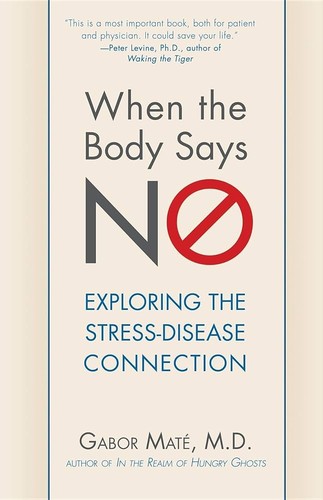
Cover shown for review. As an Amazon Associate, Coach Kev earns from qualifying purchases.
Gabor Mate spent years as a family physician and later worked in palliative care, and the pattern that eventually became this book started as an observation he could not stop making in his own patients, that the people showing up with autoimmune disease, certain cancers, and chronic illness shared a personality style far more often than chance would predict, a lifelong habit of putting everyone else's needs ahead of their own and calling it virtue. When the Body Says No is his attempt to explain that pattern in mechanical terms rather than mystical ones, and it belongs in the Life Uncensored library because it takes something people treat as bad luck, getting sick, and asks whether some of it is actually a system finally enforcing a boundary the mind refused to set.
I want to be careful with what this book actually claims, because it is easy to hear "suppressed emotion causes cancer" and either buy it wholesale or dismiss the whole thing on the spot, and neither reaction does it justice. Mate is drawing on real research into the relationship between chronic stress, the immune system, and disease, including the psychologist Lydia Temoshok's work on what she named the Type C personality, a pattern of compulsive niceness, difficulty expressing anger, and reflexive self-suppression that showed up disproportionately in some of her patient populations. That research describes a correlation worth taking seriously, not a proven single-cause mechanism, and Mate himself is a physician, not someone selling you an alternative to your oncologist. The honest version of his argument is narrower and more useful than the internet's version of it: chronic, unexamined self-suppression is a real physiological stressor, stress hormones do measurably affect immune function over time, and a body running that stress load for decades is not the same body as one that is not, whatever the ultimate disease outcome turns out to be for any one person.
The mechanism underneath the case studies is the part I actually use in coaching, and it is this: a boundary is information, and if you will not let yourself feel or express it consciously, your body still has the information and will eventually deliver it a different way. The clenched jaw before a conversation you are dreading. The stomach that drops the moment someone asks a favor you already know you should refuse. The bone-deep exhaustion that shows up not on the day the work was heaviest but on the first day you finally have permission to stop. None of that is your body malfunctioning. It is your body doing the boundary-setting your conscious mind opted out of, and it will keep doing it in escalating forms for as long as the opt-out continues, because the information does not go away just because you declined to hear it the polite way.
Mate calls the personality style behind this "the good little girl or boy" role, the child who learned early that their own needs were negotiable and other people's were not, and who built an entire adult identity around being the reliable one, the low-maintenance one, the one who does not make things harder for anyone. It is a survival strategy that works beautifully in childhood and in the first decade or two of a career, and it is exactly the profile I see constantly in high-performing clients, the person everyone leans on who has never once been asked who they lean on, because they trained everyone around them, including themselves, never to ask. The applause for being easy to work with and easy to love is real, and it is also the reward that keeps the pattern running long after it stopped being a survival skill and became a slow bill coming due.
The rep, and it is a genuinely small one: today, notice the exact moment your body registers a no before your mouth says a yes. Not the whole meeting, not the whole relationship pattern, just the specific physical instant, the tightening, the dip, the held breath, where your system already knows and your mouth has not caught up yet. You do not have to act on it. You do not have to suddenly refuse the favor or blow up the meeting. The entire practice, for today, is closing the gap between the body's signal and your own awareness of it, because you cannot set a boundary you have not first let yourself notice you need.
For Leaders
This matters beyond your own health, because a team reads what you model far more than what you say, and a leader who never says no, who answers every message at midnight and calls it dedication, is quietly training the room that self-erasure is the price of belonging here. You do not fix that by giving a speech about work-life balance. You fix it by letting your team actually watch you decline something reasonable, out loud, without apologizing for it three times on the way out.
For Individual Contributors
The practice is closer to the book's own case studies, running the same body-first noticing on yourself before you diagnose your exhaustion as needing more sleep or a better system. The tiredness that will not resolve with rest is frequently not a rest deficit at all, it is an unpaid boundary bill, and no amount of sleep pays down a debt the body is still actively accruing every day you keep saying yes to the thing it is telling you no about.
This is not a book that will let you feel comfortable being the reliable one for very much longer, and that discomfort is the point, not a side effect. When the Body Says No is dense with real clinical material and worth a slower read than many books on this list: https://www.amazon.com/dp/0470923350?tag=cklu-ionos-20. You were not born unable to say no. You were trained out of it, by people and circumstances that needed you compliant, and a training can be examined, which means it can eventually be retrained.
Stay in the loop
Get new posts by email
Pick what you want and I will send it to you.
I will email you the posts you tick, about once a week. You can change what you get or leave from the bottom of any email. Your address stays with me and my email service, Kit.